Considering the relation: the world that a technological artefact creates

Postphenomenology is the study of human-world relations as per mediated by technology and specifically, technological artefacts.

There can be no technology apart from human beings, which is the big philosophical truth claim. Technology exists to assist human beings, to enhance their experience, to help navigate, control and interpret the natural world in which they are situated.  Therefore, it really is about the humans’ relationship with their environment, but much more than that, their world (at that given time and space, as perceived by them), that makes technology an inevitable necessity, and so must exist between them in some form or fashion.

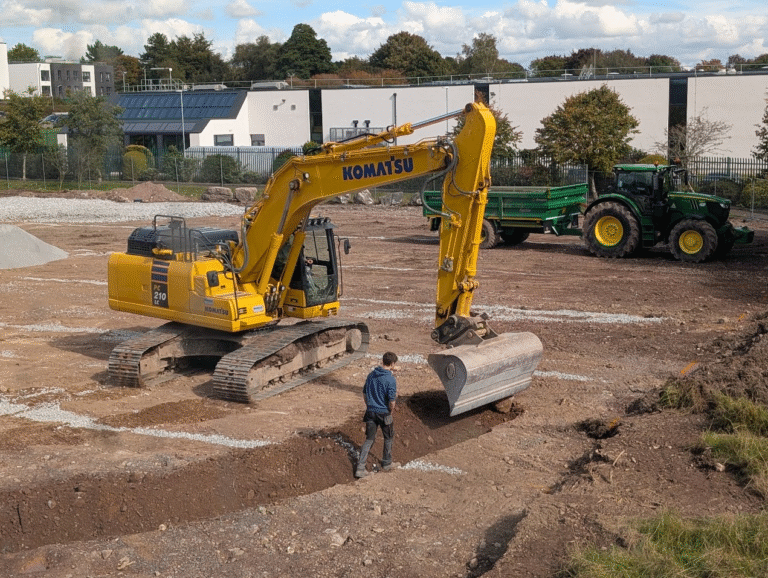
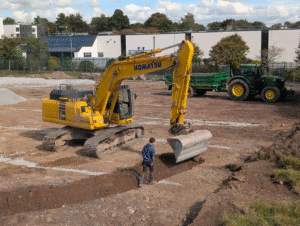
I simply looked out through my office window and I immediately thought of what I saw as a great example as there was some construction work taking place. Take for instance, when a human whose profession is that of a construction worker gets inside the digger or any other powerful machinery, their world quite literally (assuming they corroborate this claim if I ask them (elicit descriptive account of their first-person, subjective experience), transforms their world by simply mounting the specifically designed technology (in this case, the digger), from what it was even a few moments prior.  

I can imagine this, as I too have the body of a human being, (Merleau-Ponty’s body schema), that my perspective, my immediate literal field-of-view as perceived by my eyes, would change in that I will be at least one metre or two off the typical plane on which my two feet (the extent of my schema) are usually grounded upon. I will be up high, and the view there is different. I would be able to see what is beyond a six-foot-high fence, and see other things that would have been obscured from my knowledge, awareness, and consciousness, even. Thus, my perceptual spatiality and temporality are transformed. This is but a component of a wider, larger co-constituted world that the digger technology brought about.

I could easily bring into this discussion the other changes to one’s lifeworld that transpires, such as the immediate acquisition of power (in its physics definition, the rate at which work is done or energy is transferred). This seems frivolously obvious, one might easily say, a simple application of common sense. However, I am articulating a theoretical framework and subjecting common-sense ideas to rigorous conceptual analysis here. The human (the construction worker) can now, through the mediation of this powerful machine (the digger), dig, scoop and shift a far more significant amount of soil than he could ever have done with only his human body (hands Vs digger bucket). Comparing the two human-world relations,  one mediated by technology and one without, warrants the observable, objective conclusion that they are different in orders of magnitude. And that is just from a third-person/party perspective. Imagine this from the first-person perspective. It’s an embodied superpower! It changes the human, it changes the(ir) world, and a new lifeworld emerges. 

(Human – Technology → World)

(H—T→W)

Construction Worker — Digger → Elevated, Powerful, Accessible Works-site

This is a typical Ihdean formulaic expression to capture the relations that are made to exist through the technological artefact. I get it, technology mediates the human as they apply intentionality in which case their world.

A thought experiment

A Philosophers’ Roundtable

As I reflect on some of the great thinkers on technology (and I’m sure there are many more I’m simply unaware of), I find myself asking: what might these key figures say about the subject today? This exercise is my way of exploring and expressing my understanding of the powerful ideas I’ve encountered in their work. I’m deliberately using casual language here—I want to share my thoughts openly, unburdened by the constraints of formal academic writing.


To frame this discussion on technology, I bring in Bruno Latour and Martin Heidegger as contrasting, foundational alternatives.

However, I want to step back from their most absolute positions. I’m not adopting Latour’s full Actor-Network Theory (ANT), where every player—human or non-human—is reduced to a node in a network, with us as ‘neutral’ observers merely describing a busy system.

Nor am I fully accepting Heidegger’s concept of Enframing (Gestell), which warns that Technology with a capital ‘T’ totally reduces the lifeworld (lebenswelt) to commodified resources. I appreciate his deep concern—a powerful warning against a path toward dehumanization—but I think Don Ihde offers a more nuanced starting point: technologies enable diverse lifeworlds through their mediating roles. Whether this mediation enriches our world or abstracts and reduces it is precisely the question we must explore.


The Phenomenological and Pragmatic Views

Edmund Husserl, born just before the computer and the digital age, might find Ihde’s technologically rich lifeworld fascinating. Ihde’s book, Husserl’s Missing Technologies, suggests that different technologies can be viewed as “the things themselves,” a core pursuit of phenomenology.

Then there’s John Dewey, the pragmatist. He is focused on action: if something works, it’s good, representing progress and improvement. My caution here is against reducing human value purely to productivity, efficiency, and performance. Surely, human experience and human perception have an inherent value worth examining on their own terms. Dewey might find common ground with Latour’s interest in function, though Latour seems content merely observing the system’s function, perhaps even a bit detached.

Let’s not overlook Maurice Merleau-Ponty. He wouldn’t necessarily align with or oppose any of these figures, but he would certainly offer the definitive statement: that none of these philosophical debates matter without bodies!

All experience is bodily experience. This seems like an undeniable truth, yet it’s often sidelined. Experience itself is a uniquely privileged quality that objects are simply not entitled to. Whether an experience is rich, meaningful, and deep, or depressing, abstracted, and resource-driven, it all requires a body. As Merleau-Ponty would insist: “you don’t have bodies, you are bodies.” Technologies, in this view, come into play as extensions of our embodiment.


The inclusion of the non-phenomenologists, Dewey and Latour, is vital because they offer alternative perspectives that challenge the focus on ‘mushy,’ subjective, hard-to-capture human experience (a challenge I happily accept!). “I have a headache, that is the truth and none of you can disputed me on that!” a Husserlian would say.

Yet, I’d argue that the world exists as it does today precisely because human experience is the driving force! Our desire to move away from suffering, toward a better world, or simply to leave our mark this is why the world is so dynamic. Science and technology are simply offshoots of this fundamental human craving for experience. We discover, innovate, and pursue because we wonder, and that wonder brings about new things (technology and all non-nature artifacts).

Phenomenology provides a deeply rich way of examining these experiences. Postphenomenology just doubles down, applying that depth specifically to technology. The humans’ relation to their world as mediated by technology. While there are certainly other valuable ways to study complex technological artifacts (MRDTs), the postphenomenological approach seems ripe for expansion, which I plan to explore in the next section.

In all seriousness, I need to write this bit up well in my research narrative in my full proposal.

Don Ihde’s “quartet” and MRDTs

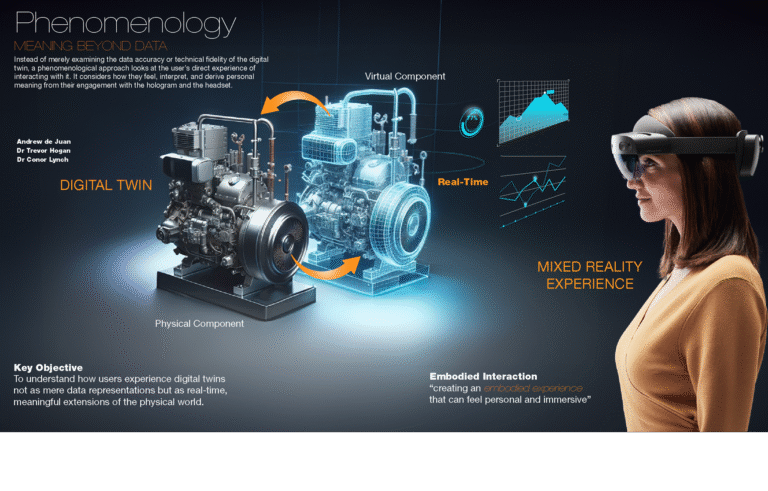
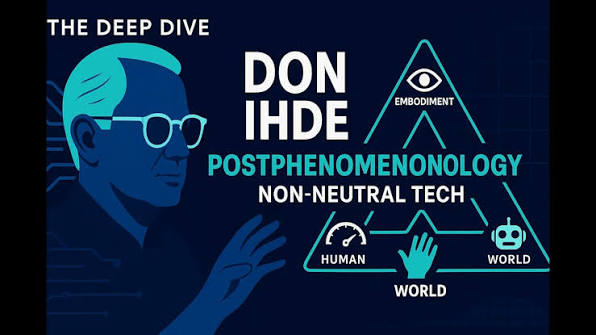
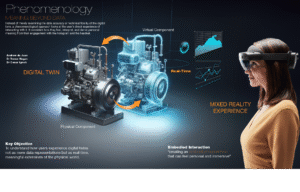
The specific technology focus that an MRDT (i.e. component/asset twin in hologram form) brings can almost fit snugly into the four human-technology-world relations. These are categorised notions that have been observed which various technologies bring about, when the human (subject) and the specific technology (object) meet. MRDTs, as their own entity, fit the bill of all four, whereas previous examples present different technologies for each of these notions. An MRDT dynamically and vividly manifests all four. Let’s consider each one.

Embodiment Relations

For the “embodiment relations”, where the classic eyeglass technology integrates seamlessly, embodied as it is used. As Ihde describes,

“I relate to my environment, my world,” by means of such technologies, and if they are well functioning, then experientially they are “taken into my very sense of bodily experience.” My awareness of wearing glasses is a fringe awareness that gets interrupted only when there is back glare, or when the glasses slip off my nose, or when the lenses get dirty and smudged, when, in other words, something diminishes the normative transparency of the optics” (Ihde, 2012, p. 244).

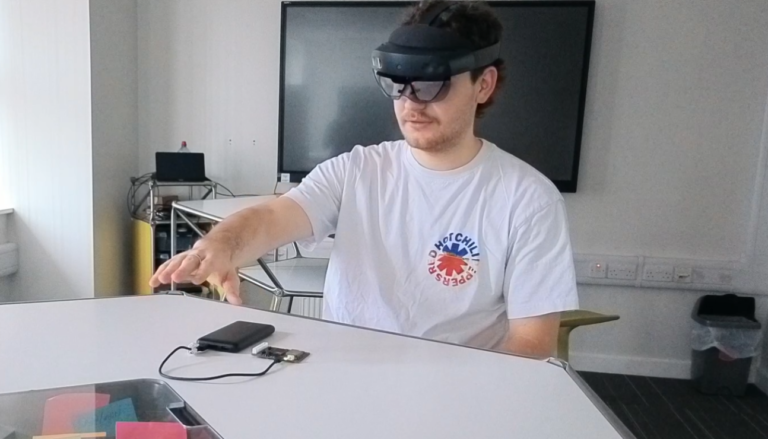
This week, I was looking at the state of mixed reality (MR). MR is an immersive medium for experiencing media. It is a blend of the real physical environment with interactable 3D virtual artefacts. Headsets that can facilitate this are the likes of HoloLens and the HoloLens 2, where the user engages with the (still) bulky, computerised smart glasses. As Ihde remarks, however, wearing his glasses “is a fringe awareness,” but the HoloLens 2 is more than noticeable. It isn’t altogether invisible to the user wearing it, and also to the observer who might take more notice of someone when their eyeglasses are removed from their face, the familiar face that always incorporates eyeglasses as part of their bodily feature. It might still be embodied in the sense that their perception has been augmented, imbuing them with another sense, one that can perceive greater detail thanks to visualised data streaming through it.

Hermeneutic Relations

Interpreting the “readouts” of technology.

Alterity Relations

This “quasi-other” entity. We talk with and treat some technologies as if they were another human.

Background Relations

The invisible and responsible infrastructure that affects our experience in and of the world.

What are my key objectives?

For my PhD full proposal, it is important that I understand what my overarching goals are and subsequently the objectives that underpin the primary objective.

The overarching objective of this research is to develop a comprehensive postphenomenological understanding of the lived experiences of users interacting with dynamic MRDTs, specifically analysing how this technology mediates their perception, action, and understanding within a hybrid physical-digital environment. By properly applying this postphenomenological framework, a robust research plan will be designed and configured as outlined in this proposal in order to extract and articulate first-person perspective accounts through appropriate and effective data collection methods. Achieving this will establish the core phenomenological data (the “what” and the “how” of experience), which will be the basis for all the potential outputs of the in-depth analysis.

The primary objective of the research project is contingent upon achieving the following supporting objectives:

  1. To design, construct, and implement a functional MRDT system, comprising a physical component (e.g. smart cube) equipped with sensors and a custom-developed HoloLens 2 application for real-time holographic visualisation and bi-directional interaction. This would be the reduced form and representative of an asset twin, which will establish the specific technological system that will serve as the phenomenon to be observed in this study.
  2. To analyse how Don Ihde’s human-technology relations (embodiment, hermeneutic, alterity, and background) manifest in user interactions with MRDTs, and how these relations shape their experience of agency, presence, and connection. This is the core theoretical framework that will be used to interpret the lived experiences of the selected participants.
  3. To identify essential themes and structures in user accounts of MRDT interaction, revealing the perceptual transformations and shifts in sense-making facilitated by the technology. This will be the in-depth analysis of the data collected. The bulk of the novel contribution is envisaged to arise from the synthesis and deeper analysis of the data.
  4. To develop a set of design considerations, informed by phenomenological analysis, that foster user-centred MRDT interfaces. This represents a potential offshoot of the research findings. From the perspective of MR application development, these insights could highlight new avenues for improving user interface (UI) design, as user experience (UX) will be thoroughly explored.
  5. To disseminate the findings through peer-reviewed publications and presentations, contributing to the fields of HCI and the philosophy of technology. This is the output objective, which is highly dependent on the successful completion and analysis of all preceding objectives.

The application of this postphenomenological framework to the interaction with this particular technology is to achieve the overall objective of gaining a deeper and nuanced understanding of the lived experience of users interacting with MRDTs. This will be a phenomenological inquiry informed by Don Ihde’s postphenomenology and his framework of Human-Technology Relations (HTR). The impact and contribution will advance the nuanced current understanding of the postphenomenology of MRDTs as a novel technological context in the ICT and HCI fields.

Ihde’s Programs – The strength of postphenomenology in my research

Postphenomenology focus

As I’ve done more reading on what postphenomenology as a philosophical orientation, and what it offers to my research focus, which is a viable phenomenological exploration of MRDTs, I am becoming more convinced of its strengths. However, I am finding myself in the middle of the current debate of whether the focus on technology is either at the level with the individual or broadly, on a societal or cultural level. Ihde acknowledges that there are at least two perceptions, he calls them ‘microperception’ (on the individual level) and ‘macroperception’ (on a broad, cultural level). He does not deny their interdependency on one another but has been criticised for artificially separating them.

My position is that while I acknowledge the significant impact of broader societal and cultural forces on technology, as Ihde discusses in Program Two (Ritter, 2021), my research takes a more focused path, centering on the individual’s direct experiences with MRDTs. I believe this emphasis is crucial because a detailed understanding of these micro-level interactions is vital for potentially shaping the very design and development of MRDTs. By carefully examining how individuals perceive, interpret, and interact with this technology in specific situations, I aim to build foundational knowledge that can potentially lead to the creation of MRDT applications that are more intuitive, designed around the user, and ethically sound. 

Full Research Proposal

See the live document of where my full proposal is currently. It constantly changes but as I make modifcations to it, I improve my research narrative, the structure and flow.

The following is a short overview and justification of my chosen and proposed methodology for the Research Strategies Module in MTU.

Introduction

My PhD research methodology is a qualitative inquiry fundamentally grounded in a phenomenological approach. My research undertakes a phenomenological exploration of user experiences with dynamic Mixed Reality Digital Twins (MRDTs). Drawing from the philosophy of technology, which posits the deep integration of technology into our lives, this research employs a qualitative methodology designed to investigate how MRDTs, as a specific form of technology, mediate human experience—a central concern within this philosophical field. Consequently, this research adopts Don Ihde’s postphenomenology. This framework, rooted in classical phenomenology, blended with pragmatism to specifically address technology, aligns well with my research question(s).This specifically relates to the four techno-human relations (embodied, hermeneutic, alterity and background relations) (Ihde, 1990).

Phenomenology, as a philosophical approach, seeks to understand phenomena as they appear to consciousness, prioritizing the study of lived experience. This is a vast topic and one can take a myriad of avenues because there are potentially an infinite number of phenomena that can be observed and studied. My objective as a researcher is to adopt a phenomenological approach to explore the subjective experiences of users interacting with MRDTs, focusing on the “what” and “how” of their perceptions and interpretations. This aligns with the broader concern of the philosophy of technology, which prompts us as humans to examine how technology influences our experience of this world. Thus, my methodological approach, grounded in phenomenology, will specifically utilize the framework of postphenomenology. A crucial consideration for my chosen methodology is that it must address not only the user or the technology in isolation, but the dynamic, co-constitutive relationship between them. The four conceptual “lenses” as it were, are the four human-technology relations that formed the basis for my research questions and consequently my methodology. Crafting this methodology involves exploring the various methods of data collection that other researchers and phenomenologists have employed that have yielded relevant and insightful information as well as the analyses that enabled the interpretation of the data gathered. I break these down in the following sections: phenomenological approach, theoretical framework, research design, data collection and data analysis. I also provide a critical justification for each of these.

Phenomenological Approach

I have settled on the phenomenological approach, primarily because this is my PhD supervisor’s area domain. But aside from that, I have come to develop my own appreciation for this whole new world (to me) of phenomenology. Coming from an engineering background, both in education and profession, I am used to developing technology and conducting empirical experiments where assessing and evaluating data from more of a quantitative perspective is typical. So, phenomenology was a good introduction for me to look at technology in a different way.

This phenomenological approach which is a philosophical tradition fundamentally concerned with the direct investigation and description of consciousness as well as the lived experience from the first-person perspective. The central aim is to gain a deep understanding of the subjective experiences of individuals interacting with complex Mixed Reality Digital Twins (MRDTs). Phenomenology provides the theoretical grounding to move beyond purely technical descriptions or objective performance metrics, focusing instead on how this interaction appears and is felt by the user. This emphasis on lived experience makes phenomenology uniquely suitable for investigating the core premise that technologies like MRDTs are not passive instruments but actively mediate and shape human perception, action, and understanding of the world.

Theoretical Framework

The primary theoretical framework guiding this research is Don Ihde’s postphenomenology which builds directly from the phenomenological grounding. Ihde’s work emphasizes the crucial role of technology in mediating human-world relations. Ihde’s insistence on empirical investigation into how particular technologies mediate our experience of the world is important. Instead of treating technology as a neutral tool, Ihde’s framework analyses the active role technologies play in shaping human perception, action, and understanding. Key to this analysis are Ihde’s concepts of human-technology relations, which include: embodiment (technology as an extension of the body), hermeneutics (technology as a tool for interpreting the world), alterity (technology as a quasi-other) and background relations (technology forming an unnoticed context). I believe that these relations provide a valuable framework to analyse how users engage with and experience MRDTs because I can systematically investigate their interaction through this conceptual toolkit.

I like the fact that I can use this framework which delves into the relationship between a particular technology and the individual (Ritter, 2021) and do not concern itself too much with the essence of technology as a whole or focusing too much on its societal impact.

Furthermore, I think this approach is deemed more appropriate for investigating MRDT interactions than other phenomenological offshoots. Psycho-phenomenology, for instance, primarily focuses on the subjective experience of psychological states (Hogan et al., 2016), while neurophenomenology seeks to correlate first-person experiential data with neuroscientific findings (Head & Helton, 2018). While valuable in their respective domains, postphenomenology’s direct and specific focus on the structure of human-technology relations and technological mediation makes it uniquely suited to analysing the user’s interaction with MRDTs. Postphenomenology adopts a pragmatic approach that facilitates a focused investigation of the phenomenon in question—the human interaction with MRDTs—and how this interaction co-constitutes experience.

Research Design

A purely qualitative research design is proposed to facilitate an in-depth exploration of the nuances and complexities of user experiences with MRDTs. This approach prioritizes rich, descriptive data and interpretive analysis to capture the subjective meaning-making processes involved in this interaction. I believe that this the most appropriate research design for this investigation because it facilitates an intensive, holistic examination of the phenomenon – user interaction with a MRDT within its real-world context. In order for me to understand what it is like for a user to perceive and interact with a physical object or system simultaneously through a digital overlay, to experience this fusion of physical and virtual i.e. blended realities, it would demand a focus on the user’s first-person, lived experience.  

Using a case study approach means that I can zoom in on just a few participants, or a particular way the technology is used. This allows me to extract detailed and rich information which is needed to apply Ihde’s framework. This would help me see exactly how the technology is mediating the user’s experience, rather than trying to get broad, statistically general answers.

Data Collection Methods

The data collection method chosen will be a combination of various methods, hence a multi-method data collection strategy. This strategy comprise of semi-structured interviews, supplemented with video-cued recall along with multiple perspective recordings (first- and third-person video recordings)

Semi-structured interviews will be the primary data collection method. These interviews will allow for detailed exploration of participants’ lived experiences, perceptions, and interpretations of their interaction with the MRDT. The open-ended nature of semi-structured interviews facilitates the elicitation of rich narratives and the exploration of emergent themes, which is essential for capturing the “experience accounts” relevant to this research. This method is also one of the most used in postphenomenology in order to cover relevant themes while also keeping an open mind to the participants’ answers and facilitate in-depth conversations (Frennert et al., 2023; Funderskov et al., 2019). Semi-structured interviews are appropriate to use due to their capacity to elicit detailed narratives and explore individual interpretations, particularly that of the MRDT interaction.

I had thought about including the think aloud protocol, but this method imposed on the subject, might affect their cognitive overload. Furthermore, this observation is not primarily on the usability of the mixed reality application but rather on the relationship perceived between the user and the 3D holograms.

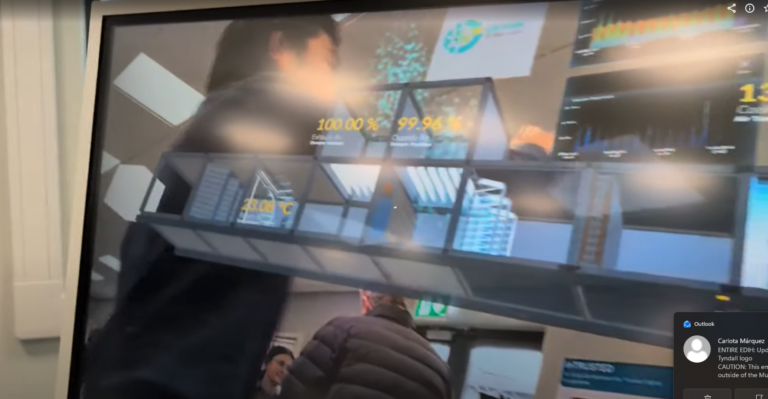
Multi-perspective video recording (first person from the MR headset and a separate camera) will be employed to capture the embodied aspects of user interaction with the MRDT. This method will provide valuable data on non-verbal cues, physical gestures, and the dynamic interplay between the user and the technology, which is crucial for understanding how the MRDT mediates their experience.

Multi-perspective video recording is crucial for capturing the embodied nature of this interaction, providing valuable data on how users physically engage with the system.

Participant observation may be used to provide contextual understanding of the user’s interaction within a broader setting. This method, if employed, will involve the researcher observing and documenting user behaviour and interactions over a period of time to capture the subtleties of their experience. All in all, the methodological triangulation, strengthens the study by providing a more comprehensive and validated understanding of the phenomenon.

Data Analysis

Finally, the analysis of data directly through Ihde’s postphenomenological concepts is the most appropriate because it ensures theoretical coherence from start to finish. It involves using the specific framework chosen for its suitability to MRDTs (the four relations, mediation, etc.) as the interpretive lens for making sense of the rich, multi-modal data. This approach allows for a systematic and theoretically grounded examination of how the MRDT specifically structures and mediates user experience, perception, and action. It moves beyond generic thematic coding to provide a nuanced, philosophical interpretation of the human-technology-world relationship as co-constituted by the MRDT, directly addressing the research aims in a way that a less theoretically integrated analytical approach could not.

Conclusion

In conclusion, this qualitative methodology, grounded in phenomenological principles and guided by Ihde’s postphenomenology, provides a robust and appropriate framework for exploring the lived experience of users interacting with dynamic MRDTs. Acknowledging the inherent nature of qualitative research, the rich, interpretive depth it offers (a significant strength) also necessitates careful consideration. For instance, the interpretive role of the researcher will be managed through systematic analytical procedures and reflexive practices to ensure the trustworthiness and credibility of the findings.

Furthermore, the ethical dimensions of this study, particularly given its focus on individual experiences and the use of video and audio recordings, are paramount. Strict adherence to ethical guidelines, which will be comprehensively outlined in the research ethics application, will be maintained throughout the research process. This includes the implementation of a robust data management plan to ensure the secure and responsible handling of all personal data collected from participants. While qualitative inquiry often involves an iterative process of refinement, the foundational approach offers a coherent and justified pathway for this investigation. By focusing on the mediating role of technology and employing methods designed to capture the richness of human experience, this research aims to contribute valuable insights to both the philosophy of technology and the practical design and application of future MRDT systems.

References

Frennert, S., Erlingsdóttir, G., Muhic, M., Rydenfält, C., Milos Nymberg, V., & Ekman, B. (2023). ‘It increases my ability to influence my ways of working’: A qualitative study on digitally mediated patient management in primary healthcare. Scandinavian Journal of Caring Sciences37(1), 88–105. https://doi.org/10.1111/scs.13099

Funderskov, K. F., Boe Danbjørg, D., Jess, M., Munk, L., Olsen Zwisler, A.-D., & Dieperink, K. B. (2019). Telemedicine in specialised palliative care: Healthcare professionals’ and their perspectives on video consultations—A qualitative study. Journal of Clinical Nursing28(21–22), 3966–3976. https://doi.org/10.1111/jocn.15004

Head, J., & Helton, W. S. (2018). The troubling science of neurophenomenology. Experimental Brain Research236(9), 2463–2467. https://doi.org/10.1007/s00221-016-4623-7

Hogan, T., Hinrichs, U., & Hornecker, E. (2016). The Elicitation Interview Technique: Capturing People’s Experiences of Data Representations. IEEE Transactions on Visualization and Computer Graphics22(12), 2579–2593. https://doi.org/10.1109/TVCG.2015.2511718

Ihde, D. (1990). Technology and the Lifeworld. Indiana University Press. https://iupress.org/9780253205605/technology-and-the-lifeworld/

Ritter, M. (2021). Philosophical Potencies of Postphenomenology. Philosophy & Technology34(4), 1501–1516. https://doi.org/10.1007/s13347-021-00469-0

Justifiying my Methodology

Assignment submission due (Research Strategies Module)

There is a submission on May 6th for the module, Research Strategies, which I am currently working on. The assignment requirement is to provide my critical justification for my chosen methodology in framing and executing my research. What is the most suitable approach, and why is it appropriate for addressing the research question(s) that I have laid out for myself? This assignment question has forced me to dwell on my proposed methodology, but inevitably solidify and validate some of the methods that I have chosen. It also constantly reminded me to defend and critically analyse the methods, and not just to simply state that they align. I had to argue how it does and also discuss the limitations and the various trade-offs of prioritising one over the other.

Research Ethics Application Form

Completing this form is an absolutely necessary requirement given that my methodology is going to be fully qualitative, meaning that humans and human data are going to be involved.

So what I’ve done is simply looked at the Minimal Risk Human Research Ethics Application Form. I have not delved into what sort of forms the data collection/gathering will take. Although I am pretty confident that a semi-structured interview will be one to include.

I will also need to have a robust data management plan for sure, as I will be, in some form, storing the data digitally (i.e. text documents, audio & video recordings). I can complete some fields of the form for starters, but for meto properly complete it, I would need my research design ironed out and my literature review completed.

Short-term goals

Up until September, I should have some clarity on what I am doing more so than before.  So my hit targets are:

  1. Literature review and proposal development   
  2. Ethics approval
  3. Initial MRDT system setup

Breakdown of Time Allocation (Approximate and extremely ambitious):

Year 1:

  • Literature review and proposal development    
  • Ethics approval
  • Initial MRDT system setup – I’m greatly underestimating this technical development project 

Year 2:

  • Pilot study and refinement
  • Participant recruitment
  • Data collection (substantial portion)    
  • Initial data transcription and analysis

Year 3:

  • Intensive data analysis (IPA or thematic analysis)
  • Connecting findings to Ihde’s framework    
  • Drafting methodology and findings chapters

Year 4:

  • Completing thesis draft
  • Seeking feedback and revisions

Year 5:

  • Final thesis revisions and submission
  • Viva voce examination preparation and defense

We shall see how I get on. These simple lines entail hours of thinking, designing and developing.

More Postphenomenology stuff

Core Concepts and Principles

Ihde’s postphenomenology marks a significant shift in the philosophy of technology, moving away from considering technology as a set of isolated objects to focusing on the dynamic and complex relationships between humans and technology. A prominent characteristic of postphenomenology, which makes it fully contemporary, is its inclusion of technoscience studies. Ihde strongly advocates for what is known as the empirical turn in the philosophy of technology, arguing that we need to move away from abstract generalisations about “technology” and instead concentrate on concrete technologies and their specific roles in our lives (Ritter, 2024). Central to Ihde’s framework is the concept of technological mediation, which posits that technologies are not neutral tools but actively mediate or shape our experience of the world. As Ihde argues, technologies influence our perception, action, and understanding, challenging the notion of technological neutrality (Ihde, 1990). Ihde challenges the idea that technology is simply a tool that we use objectively, arguing that technologies possess a form of “intentionality” and affect our experience in ways that we may not fully realise. To properly investigate these influences, Ihde emphasises the importance of empirical investigation, advocating for the study of actual technology-user interactions (Ihde, 1993); this emphasis justifies the use of qualitative methods like interviews and observation to gather rich data on user experiences with MRDTs.  

Ihde’s Human-Technology Relations (This may be the crux of my analysis)

Ihde’s framework includes specific categories of human-technology relations, which are crucial for this analysis (Ihde, 1990). First, embodiment relations occur when technology becomes an extension of the human body or senses (Ihde, 1990). In the context of MRDTs, this can be seen in how the MR display might function as an extension of the user’s visual perception (Ihde, 1990, p. 72), or how interacting with the smart cube (the main object/tool for the phenomenon – currently at the conceptual stage) and receiving holographic feedback might extend the user’s sense of touch or manipulation. Second, hermeneutic relations describe situations where technology serves as a tool for interpreting the world (Ihde, 1990). With MRDTs, the holographic visualisations of data act as a “technology-world” representation that users must interpret to understand the real-world entity they mirror (Ihde, 1990, p. 83). Third, alterity relations emerge when technology is experienced as “other,” almost as having its own agency (Ihde, 1990). In MRDT interaction, it is important to examine if users perceive the holographic representations as having a degree of autonomy or “otherness,” particularly in how they respond to the sensor data (Ihde, 1990). Finally, background relations refer to how technology forms the environment or context of experience, often unnoticed (Ihde, 1990). This is relevant to consider how the MR environment itself, including the display and tracking, shapes the user’s overall experience, even if their focus is on the smart cube and its corresponding hologram.  

Key Concepts to Apply

Several key concepts from Ihde’s work are crucial to apply in this study. The concept of mediation, central to Ihde’s thought, goes beyond simply “going between”; it involves technology actively shaping our experience (Verbeek, 2005). In the context of MRDTs, it is essential to analyse how the MRDT shapes the user’s experience of the smart cube, the data, and the interaction itself. Furthermore, Ihde argues that technology alters our perception, leading to perceptual transformations (Ihde, 1990). This study will explore how the MRDT changes how users perceive the physical cube, the sensor data, and their own interaction within the hybrid environment. Finally, Ihde emphasises the role of embodiment in our experience of technology (Ihde, 1993). Therefore, it is important to analyse how the user’s embodied interaction, including hand movements and vision, shapes their experience of the MRDT.  

Critical Awareness

Throughout this study, it is essential to maintain critical awareness, being prepared to critically engage with Ihde’s framework. This involves acknowledging its strengths and potential limitations, demonstrating that the research is not a passive application of theory but an active use of it to understand the research phenomenon.

So, focusing on the specific technology of MRDTs.

References

Ihde, D. (1990). Technology and the Lifeworld. Indiana University Press. https://iupress.org/9780253205605/technology-and-the-lifeworld/

Ihde, D. (1993). Bodies In Technology. University of Minnesota Press. https://www.upress.umn.edu/9780816638468/bodies-in-technology/

Ritter, M. (2024). 5. Technological Mediation without Empirical Borders. In B. De Boer & J. Zwier (Eds.), Phenomenology and the Philosophy of Technology (1st ed., pp. 121–142). Open Book Publishers. https://doi.org/10.11647/obp.0421.05

Verbeek, P.-P. (2005). What Things Do: Philosophical Reflections on Technology, Agency, and Design By Peter-Paul Verbeek. https://www.psupress.org/books/titles/0-271-02539-5.html

Postphenomenology it is

Thinking about the philosophy of technology

We have gotten so used to technology being part of our lives and our experience of this world that if we remove just a few of them, it will significantly alter not only our living operationally, but also the meaning that might come from its removal.

The philosophy of technology, as a broad field of inquiry, grapples with the deep and often invisible integration, exploring questions about technological determinism, the mediation of human experience (Ritter, 2024), the relationship between technology and society, and the fundamental ways in which our tools shape who we are and how we understand the world. 

I am narrowing my research scope to the area of technology as mediating human experience (“Mediation Theory,” 2016). It was only very recently revealed to me that technology might be seen as the manifestation of our relationship with the natural environment. This really exposes my ignorance, or rather my profoundly deep level of immersion in the technology-altered world, that I have taken technology for granted. I can possibly only appreciate the alternative view when the technology to which I am hyper accustomed to is removed, and then I’ll sure be forced to change my perspective and attitude towards my natural world.

This has led me to discover and read about Don Ihde’s contribution to this broad area. He emphasised the need for empirical investigation into how particular technologies mediate our experience of the world(“Technology and the Lifeworld,” n.d.). He insisted on looking at actual artefacts and their roles in shaping human perception, action, and understanding. I think, upon first glance that the unique combination of mixed reality digital twin (MRDT) hits on the four human-technology relations, which is Ihde’s framework for understanding mediation: embodiment, hermeneutic, alterity and background relations.

Embodiment Relations

Technology is experienced as part of the body, extending human perception/action.

Example: Eyeglasses, a blind person’s cane

Schema: (human-technology) → world

How does the mixed reality interface become an extension of the user’s perception and action within the hybrid physical-digital environment?

Hermeneutic Relations

Technology represents or translates the world, requiring interpretation by the human.

Example: MRI scans, thermometers

Schema: human → (technology-world)

How do the digital twin elements serve as representations that users interpret to understand the real-world entity they mirror?

Alterity Relations

Technology is interacted with as a quasi-other, with the world in the background.

Example: ATMs, robots, vending machines

Schema: human → technology (world)

In what ways do users interact with the digital twin as a distinct entity within the mixed reality space?

Background Realtions

forms the context or environment for human experience, often unnoticed.

Example: Lighting, heating, ambient sounds

Schema: human (technology/world)

How does the presence of the mixed reality environment and the digital twin subtly shape the user’s overall experience and understanding of the real and virtual?

If I can focus my research question further, I would really like to investigate how MRDT technology mediates the human and their environment. MRDT as being the mediator and the background. It really is multi-faceted in its characteristics. It is also the focus as well as the medium in which we interpret it. I will need to properly select and justify my methodology to extract the information I need.

Data collection methods

In order for me to properly capture the experience accounts and see them through Ihde’s framework for understanding mediation, I need to have a robust data-collection method/s. To further strengthen this, I would like to employ methodological triangulation. It will at least allow me to cross-validate my findings and mitigate each method’s inherent biases. Not to mention a more comprehensive understanding by capturing different nuances and facets of the experience.

I would prefer to have at least 3 methods to accurately TRI-angulate the data. So far, the following methods are currently deemed as the most appropriate:

Semi-structured interviews

Multi-perspective camera

Optional method 3 – Participant Observation

References

Mediation Theory. (2016, March 6). Peter-Paul Verbeek. https://ppverbeek.org/mediation-theory/

Ritter, M. (2024). 5. Technological Mediation without Empirical Borders. In B. De Boer & J. Zwier (Eds.), Phenomenology and the Philosophy of Technology (1st ed., pp. 121–142). Open Book Publishers. https://doi.org/10.11647/obp.0421.05

Technology and the Lifeworld. (n.d.). Indiana University Press. Retrieved April 18, 2025, from https://iupress.org/9780253205605/technology-and-the-lifeworld/

I started my blog

This week, I started this blog to document my progress and findings as I delve into various papers, books, and other resources. I’m realizing just how vast the area of phenomenology and its philosophical framework truly is. It’s amazing how you can study a person’s lived experience in relation to any phenomenon. From something as simple as drinking tea or morning routines, to more complex things like work in a medical setting or traumatic experiences – it’s literally quite infinite. Each person’s experience is unique, and their perspective is just as valid as anyone else’s.

I am on week 32 since registering as a PhD student. I’ve completed the Graduate Research Skills module (10 credits) and am now in the middle of the second module, Research Strategies (10 credits).  I am doing this part-time which really means putting approximately 15-20 hours per week.

I am situating my research in the study of the lived experience of the user’s interaction with mixed reality digital twins (MRDTs). This single sentence line alone will require unpacking as each topic area is a whole separate study in itself. However, the combination of these will help me narrow my research scope and be focused on what my research design is to be.

This might be a long post as I am just setting the context and background of where I am and where I want to be as I embark on this academic journey. The language expression in this blog will be less than formal, and I will treat this as my diary and a brain dump of sorts. It’s a privilege to do this. I get to do this!

What I plan to do

I want to construct my own phenomenological framework in studying MRDTs. I want to understand from the literature the various data collections that capture lived experience accounts. To initially make observations on what other authors are using and why their particular methodology is appropriate and valuable. It would probably mean a significant survey of existing studies. I need to put together a robust study plan to answer my research question.

What I already have coming into this

For context, I have been working with extended reality (XR) technologies for over 5 years at this stage. I work with a team that develops virtual reality (VR) and mixed reality (MR) applications for various applications in the education and industry space. We conduct requirements elicitation and design workshops to inform the app design prior to development so we can fulfil and address the problem statement.

In all of this, however, I have not looked into the subjective experience of the user besides conducting usability studies which look more at the system aided by user feedback but not necessarily or purely from their point of view.

Digital Twins

Adding another layer into this, digital twin (DT) technology is enabling technology that is gaining prominence in various industries (manufacturing, healthcare, etc) (Semeraro et al., 2021). As a brief overview, DTs comprise three main components: the physical asset, its virtual counterpart and the real-time bi-directional data communication between the two. This is the most basic that I can describe in my own understanding. This means that the whole infrastructure to make this possible exists as data needs to be facilitated for this constant back-and-forth transmission. Not to mention the digitisation of sensed signals by the sensors, the data cleaning, data storage, data processing, data translation, serialisation and de-serialisation, mapping and visualisation. The journey of data is a fascinating study in itself – from sensors in the world to visualised information to the human user. It really is assigning meaning to constantly changing material properties as discretised data is relayed and interpreted. This real-time information becomes valuable as it informs decision-making towards efficiency and improved performance.

Mixed Reality Digital Twins (MRDTs)

Combining MR and DTs makes a unique amalgamation of technologies that expands the potential for not only experiencing data in new ways but also applying meaning in a way that was not possible before. I love seeing and interacting with holograms. Advancements in spatial computing and head-mounted displays (HMDs) have made it possible close to mainstream adoption. It is still predominantly confined to the entertainment/gaming sector, at least as perceived by the masses.

MR is the blending of virtual artefacts and the physical environment. It sits in the middle of the extended reality continuum (Milgram & Kishino, 1994). It is not fully occluded like VR and unlike augmented reality (AR), it can be interacted with thanks to the physics engine afforded by game engines. An MRDT to me then, is a digital twin, more like a component twin or an asset twin in the MR modality. These are not super new as DTs have been around as system and process twins for more than a decade now but these are presented oftentimes as dashboard interfaces – perfect for real-time alerts and simulation to improve existing processes and business models. The visuospatial context would certainly affect the user’s perception and possibly enhance greater interaction afforded by the immersive nature of the environment.

What is my research then?

It is to study the lived experience of one/s who interacts with these holograms (MR) who will have some real and observable connection to the physical object (DT). My hypothesis is that it adds a complex layer and dimension to MR than simply experiencing static MR artefacts. This in a nutshell is what I want to unpack. Hence, phenomenology. I have also become fascinated and interested in this whole new world that philosophers have philosophised about for many years. I came into this cold but I have done much reading since then.

I learned that phenomenology is an absolutely massive topic. That there are branches or schools of thought within it. Philosophers themselves have built upon and/or critiqued previous proposals in the field. Edmund Husserl seems to be the one dubbed as the father of big “P” Phenomenology and from him, various thinkers have sprung out such as Martin Heidegger, Jean-Paul Sarte and many others.

They’re the ones who thought deeply about human experiences, and out of that came the qualitative framework or research approach, small “p” phenomenology, studying the structures of consciousness (Smith, 2018). These are adopted by many researchers who want to gain insights from a first-person experience of a particular phenomenon.

One key central aspect of phenomenology is intentionality –

The notion that our consciousness is always directed toward something. We are always conscious of something – whether on an object or a thought or a feeling. We don’t experience things in isolation but always in relation to ourselves.

Toward or about something, This “aboutness” implies that consciousness is always situated in relation to an object – always linked to the outside world.

Phenomenology insists that the self’s experience is shaped by its interactions with the world which is integral to how meanings are formed.

A person experiencing something, directs their attention and focus to an object, in my case, an MRDT, and so how do I retrieve some of that information? What can I do to extract data from that? What will I even expect to collect? What forms do these data take? Is it measurable, as in in an empirical way?

This is what I am currently grappling with. I hope then to develop a framework, phenomenological framework for MRDTs.

Observed research gaps

There are plenty of papers, use case studies, and development frameworks that delve into the making of MRDTs. Who is out there studying people’s experiences with them? I suspect that not many have access to this tech although it is becoming more mainstream but those who do, look more into the technical aspects of it. As I have seen so far, many assume a UI design and use existing templates. It looks to me like a translation of 2D screens into MR environments (Bogdanov, 2024; Xing et al., 2024). I understand that you need to make design decisions for the application to exist in the first place. But is it the best way? Is it appropriate?  I am not about to embark on designing UI and developing frameworks in the actual design of these MR apps but maybe as a spillover of my curiosity as I look into people’s accounts, insights will come out of it that might just be beneficial. For starters, I want to make observations, and capture them in the most appropriate way. Argue why a particular method or set of methods is relevant and why they wouldn’t be.

I would need to do a survey, a sweeping broad overview of what’s out there in literature to at least point me in a direction that I can take. I can refine the paths as I go.

So where has that led me so far?

Phenomenology is too all-encompassing, it touches all of human life really. From emotional, mental and spiritual to physical and psychological – all are at play. And so I found out about Don Ihde’s postphenomenology as my supervisor, Trevor Hogan pointed me to. His human-technology relations (Ihde, 1975) fits my inquiry. MR and DTs are advanced technology unlike what humans have seen before. He has looked into how people do not just interact with technology but argues that technology is intricately linked to how we live and experience the world. Humans do not merely use technology, but technology mediates humans with their world. This fits the bill for me as MRDTs by their nature do that as most technology do I suppose.

So on to my study plan

I need to solidify a number of things:

What do I want to look at?

How do I go about it?

And be super strict on my reasons for my decisions, –  why am I choosing to use this over this?

Before looking at any papers, I need to have a robust study plan – My Study Plan

References

Bogdanov, V. (2024, March 17). Mixed Reality Use Cases and Challenges in 2024. Rinf.Tech. https://www.rinf.tech/mixed-reality-use-cases-and-challenges-in-2024/

Ihde, D. (1975). The Experience of Technology: Human-Machine Relations. Cultural Hermeneutics2(3), 267–279. https://doi.org/10.1177/019145377500200304

Milgram, P., & Kishino, F. (1994). A taxonomy of mixed reality visual displays. IEICE TRANSACTIONS on Information and Systems77(12), 1321–1329.

Semeraro, C., Lezoche, M., Panetto, H., & Dassisti, M. (2021). Digital twin paradigm: A systematic literature review. Computers in Industry130, 103469. https://doi.org/10.1016/j.compind.2021.103469

Smith, D. W. (2018). Phenomenology. In E. N. Zalta (Ed.), The Stanford Encyclopedia of Philosophy (Summer 2018). Metaphysics Research Lab, Stanford University. https://plato.stanford.edu/archives/sum2018/entries/phenomenology/

Xing, Y., Fahy, C., & Shell, J. (2024). Assessing web 2D user interface experiences in mixed reality. Heliyon10(11), e31916. https://doi.org/10.1016/j.heliyon.2024.e31916